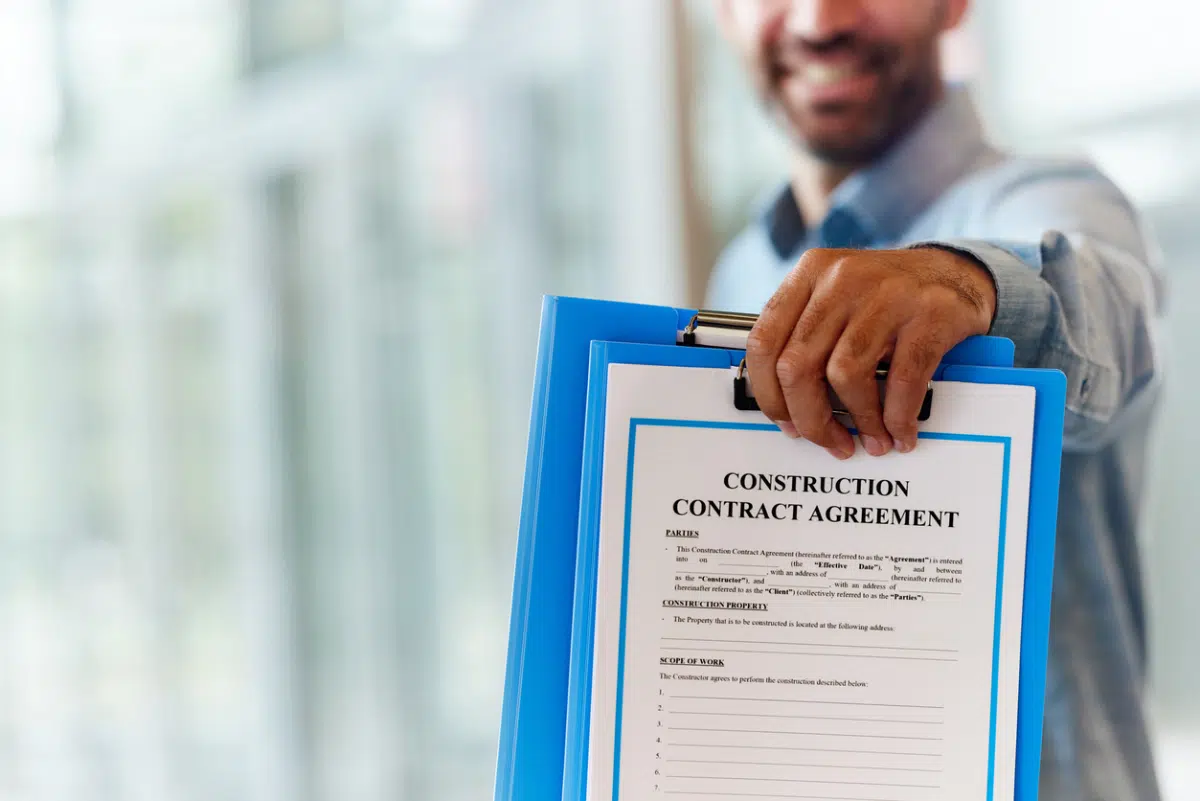



Overview of Construction Contract Law in Texas
Texas construction disputes usually start with ordinary project problems: unpaid invoices, change-order disputes, delayed materials, defective work, or arguments over who caused the schedule to collapse. A commercial build in Houston falls three months behind after steel deliveries stall. A subcontractor in Dallas finishes electrical work but never receives final payment.
Then the flurry of paperwork flies, and a dispute begins.
Texas construction law governs how owners, contractors, subcontractors, suppliers, and developers enforce their rights when a project breaks down. The contract matters first. Courts often look closely at payment terms, scope provisions, notice requirements, scheduling obligations, indemnity clauses, and dispute resolution language before anything else.
Texas Laws That Affect Construction Contract Claims
Several Texas laws play a significant role in construction contract disputes, payment issues, and defect claims.
Key legal frameworks include:
- The Texas Prompt Payment Act
- Mechanic’s and Materialman’s Liens under the Texas Property Code
- The Texas Residential Construction Liability Act (RCLA) under Chapter 27 of the Texas Property Code
The Texas Prompt Payment Act establishes payment deadlines for owners, contractors, and subcontractors on many construction projects. Parties who fail to make timely payments may face interest penalties, attorney’s fees, and other legal consequences.
Mechanic’s and materialman’s lien laws provide powerful remedies for contractors, subcontractors, suppliers, and laborers seeking payment for work performed or materials furnished on a project. These laws impose strict notice and filing requirements. Missing a required deadline may result in the loss of valuable lien rights and significantly reduce available collection options.
Residential construction disputes are also governed by the Texas Residential Construction Liability Act (RCLA). The RCLA establishes specific procedures for resolving many residential construction defect claims. Before filing suit, homeowners generally must provide written notice of the alleged defects and allow the contractor an opportunity to inspect the property and make a settlement offer or propose repairs. Failure to follow these statutory requirements can affect the course of litigation.
Because construction disputes often involve overlapping contractual obligations and statutory requirements, early legal analysis is important. Payment disputes, lien rights, construction defects, and notice requirements frequently intersect, creating issues that can significantly impact the outcome of a claim.
Why Early Documentation Matters
Early documentation often shapes the outcome of a construction dispute long before litigation begins. Daily reports, inspection logs, emails, photographs, invoices, schedules, and signed change orders become critical evidence once the parties start assigning blame.
A superintendent’s text message sent from a muddy Carrollton jobsite at 6:15 AM sometimes matters more than a polished legal argument written a year later.
Common Sources of Construction Contract Disputes
Most Texas construction disputes begin long before a formal claim is filed. Problems often develop during project planning, contract administration, or day-to-day project management.
Common sources of conflict include:
- Unclear contract language
- Incomplete plans and specifications
- Poor project communication
- Disputes over project responsibilities
- Inadequate documentation
- Scheduling and coordination failures
- Contract interpretation disagreements
Many disputes grow gradually. A misunderstanding about responsibilities, project specifications, or contract requirements may seem minor at first. As work progresses, those issues can affect project costs, schedules, and performance expectations. Once the parties disagree about who bears responsibility for the resulting problems, a construction dispute often follows.
Common Construction Contract Claims and Project Disputes
When project problems remain unresolved, they frequently develop into formal construction contract claims. These claims often involve allegations that one party failed to meet its contractual obligations or caused financial harm to another participant on the project.
Common construction contract claims include:
- Delay and disruption claims
- Payment disputes and non-payment claims
- Backcharge disputes
- Change order and extra-work disputes
- Defective construction claims
- Breach of contract claims
- Differing site condition claims
- Warranty and repair disputes
For example, an owner may allege that defective work requires costly repairs, while a contractor claims the problems resulted from design deficiencies or unforeseen site conditions. In other cases, contractors seek compensation for unpaid work, disputed change orders, or project delays caused by factors outside their control.
Delay Claims and Cost Overruns
Construction delay claims often focus on two questions: who caused the delay, and what did the delay cost?
Owners may blame contractors for understaffing the project or missing deadlines. Contractors may point to design revisions, permit problems, labor shortages, weather delays, or late owner decisions. Subcontractors may argue that another trade forced them behind schedule.
Delay damages may involve:
- Extended labor costs
- Equipment rental expenses
- Lost productivity
- Additional supervision costs
- Liquidated damages
- Increased material pricing
Project schedules, daily logs, emails, inspection records, weather reports, and updated critical path schedules often become important evidence in these disputes.
Parties Involved in Construction Disputes
Construction litigation rarely involves only two parties. Disputes frequently pull in:
- Property owners
- General contractors
- Subcontractors
- Architects
- Engineers
- Material suppliers
- Sureties and insurers
Unresolved disputes can create serious financial pressure on a project. Payments stop. Work slows down. Contractors pull crews from the site. Lenders become nervous about unfinished work and mounting claims.
A dispute that starts with one unsigned change order in Dallas or Houston sometimes spreads through the entire project within weeks. The schedule slips further every month, and the parties remain stuck in the same argument.
Change Orders and Construction Contract Modifications
Change orders modify the scope of the original construction contract after work begins. They may adjust pricing, deadlines, materials, labor requirements, or project specifications.
Common reasons for change orders include:
- Owner-requested design revisions
- Material shortages
- Hidden site conditions
- Code compliance issues
- Scheduling conflicts
- Additional work outside the original contract scope
Formal change orders usually require signed approval from both parties before extra work begins. Construction Change Directives (CCDs) operate differently. A CCD may direct work to proceed before the parties fully agree on pricing or time adjustments.
Common Change Order Pricing Methods
Construction projects typically use several pricing methods for approved changes:
- Lump sum pricing
- Time and materials pricing
- Unit pricing based on quantities completed
Disputes often arise when contractors perform additional work without written approval. A superintendent on a Dallas commercial project may verbally authorize extra excavation work during a rain delay. Months later, the owner may dispute the additional invoice entirely because no signed change order exists.
Why Written Authorization Matters
Written approval protects both sides. Contractors want proof they were authorized to perform additional work. Owners want clear pricing and documentation before costs increase.
Common change order disputes involve:
- Unauthorized extra work
- Disputed pricing
- Delay impacts
- Scope disagreements
- Verbal approvals
- Missing documentation
Entitlement disputes become especially difficult when work proceeds without signed authorization. A contractor may argue that the work was necessary to complete the project properly. The owner may argue that the work fell within the scope of the original contract and therefore warrants no additional payment.
Change Order Process, Documentation, and Deadlines
Construction projects rarely finish exactly as originally planned. Weather delays, design revisions, hidden site conditions, material shortages, and owner-requested modifications often create changes after work begins.
Most construction contracts require parties to identify potential change events immediately. Waiting too long creates problems with pricing, scheduling, and documentation.
A contractor on a San Antonio commercial project may discover underground utility conflicts during excavation. If the issue is not reported quickly, the owner may later dispute whether the extra work qualifies for additional compensation.
Step-by-Step Change Order Process
Most construction contracts follow a similar change order process:
- Identify the change event
- Provide written notice within contract deadlines
- Submit a formal Change Order Request
- Document labor, materials, and schedule impacts
- Negotiate pricing and time adjustments
- Obtain written approval before proceeding when possible
- Update project schedules and cost records
Contracts often contain strict notice deadlines. Missing a deadline may waive the contractor’s right to recover additional costs or schedule extensions entirely.
Documentation Requirements for Change Orders
Strong documentation usually determines whether a change order claim succeeds or fails.
Important records may include:
- Daily labor tracking
- Material invoices and receipts
- Equipment usage logs
- Updated schedules
- Delay analysis reports
- Photographs
- Field reports
- Cost breakdowns tied to the extra work
Schedule impact analysis also matters. An approved change may affect multiple trades, inspection dates, material deliveries, and project milestones.
Why Deadlines and Schedule Updates Matter
Many construction disputes develop because project schedules were never updated after changes were approved. One delay creates another. Subcontractors arrive out of sequence. Material deliveries shift. Overtime costs increase.
Courts, arbitrators, and project owners often examine whether contractors strictly followed contractual notice procedures. A valid claim with weak documentation or missed deadlines may lose value quickly.
On large Texas construction projects, one unsigned or undocumented change order can grow into a six-figure dispute by the end of the job.
Construction Contract Claims Process and Documentation Requirements
The construction contract claims process usually begins when one party believes the project has suffered financial loss, delay, disruption, or defective performance tied to the contract.
Most claims follow a similar progression:
- Identification of the dispute
- Written notice under the contract
- Submission of supporting documentation
- Review and response by the opposing party
- Negotiation or mediation efforts
- Arbitration or litigation, if unresolved
Construction contracts often contain strict notice requirements. A contractor on a Fort Worth project may have only 7 or 14 days to submit a written notice after discovering a delay event or extra work condition. Missing that deadline can damage the claim before negotiations even begin.
Critical Documentation for Construction Claims
Documentation often determines whether a construction claim succeeds or fails. Strong records create a timeline showing what happened, when it happened, and who knew about it.
Important records include:
- Jobsite logs and daily reports
- Emails and written communications
- Photographs and video documentation
- Inspection reports
- Updated schedules
- Labor tracking records
- Material invoices
- Change order requests
A project manager’s daily report from a muddy Houston jobsite may later become key evidence in a delay claim involving thousands of labor hours and disputed schedule extensions.
Why Centralized Records Matter
Centralizing records helps contractors, owners, and attorneys evaluate claims more efficiently. Disorganized documentation creates gaps that opposing parties often attack during negotiations or litigation.
Proper documentation strengthens construction contract claims by supporting:
- Delay calculations
- Cost overruns
- Scope change disputes
- Payment demands
- Defective work allegations
Missing records weaken recovery efforts quickly. An unpaid subcontractor claiming $ 243,200 for extra work may struggle to recover damages without signed tickets, labor records, photographs, or written approvals that tie the work to the project scope.
In large Texas construction disputes, the strongest case often belongs to the party with the clearest paper trail.
Construction Dispute Resolution Methods in Texas
Construction dispute resolution refers to the legal processes used to resolve disagreements between owners, contractors, subcontractors, suppliers, and design professionals. Texas construction disputes may involve unpaid invoices, project delays, defective work, warranty claims, or contract breaches.
Several dispute resolution methods are commonly used:
- Negotiation and settlement discussions
- Mediation with a neutral third party
- Arbitration required by contract clauses
- Litigation in Texas courts
Many disputes begin with direct negotiations between project participants. Some settle after attorneys exchange demand letters and supporting project records. Others become more formal once the financial exposure grows.
Mediation and Arbitration in Texas Construction Cases
Mediation is common in Texas construction disputes because it often moves faster than litigation. A neutral mediator works with both sides to negotiate a voluntary resolution. Mediation may reduce attorney fees, expert costs, and project disruption while preserving ongoing business relationships between contractors and owners.
Construction contracts frequently contain arbitration clauses. When enforceable, those clauses may require the parties to resolve disputes through private arbitration instead of public court proceedings. Arbitration hearings often resemble simplified trials with witness testimony, evidence presentation, and legal arguments.
Texas courts generally enforce valid arbitration agreements and arbitration awards. Once an arbitrator issues a final decision, overturning the result can become difficult unless fraud, misconduct, or major procedural problems occurred.
Comparing ADR and Litigation
Alternative dispute resolution methods often cost less than full litigation, though large arbitration matters can still become expensive. Court litigation usually involves broader discovery, longer timelines, multiple hearings, and greater procedural requirements.
Several factors influence the best approach:
- Contract language
- Project size
- Amount in dispute
- Number of parties involved
- Urgency of payment issues
- Need for temporary court orders
A construction dispute in Houston or Fort Worth may be resolved during mediation in two months. A heavily contested construction lawsuit involving delay claims and engineering experts may continue for years.
Construction Litigation, Claims Strategy, and Attorney Role
Construction disputes usually reach litigation after payment demands, project meetings, and settlement discussions stop producing results. A contractor in Austin may file suit after months of unpaid invoices. A property owner in Houston may pursue legal action over defective concrete work or major project delays. Subcontractors, suppliers, developers, and design professionals often become parties to the same dispute as claims expand.
Formal litigation may involve:
- Breach of contract claims
- Delay and disruption disputes
- Defective construction allegations
- Mechanic’s lien enforcement
- Payment bond claims
- Warranty disputes
- Change order conflicts
Some cases proceed through Texas state courts. Others move into arbitration if the construction contract requires private dispute resolution.
Attorney Role in Construction Claims
A construction litigation attorney evaluates contracts, project records, schedules, payment histories, and technical evidence to determine liability and damages exposure.
Construction attorney responsibilities often include:
- Reviewing breach of contract claims
- Analyzing delay impacts and project scheduling issues
- Calculating financial damages
- Coordinating expert witness testimony
- Managing discovery and document production
- Preparing claims for trial or arbitration
Expert witnesses frequently play an important role in construction litigation. Engineers, scheduling consultants, architects, contractors, and cost experts may evaluate defective work, project delays, structural failures, or disputed repair costs.
In a large Dallas commercial dispute, thousands of project emails, RFIs, invoices, meeting minutes, and schedule updates may become evidence before the case ever reaches trial.
Liens, Payment Claims, and Early Legal Strategy
Texas construction attorneys also help enforce mechanics’ lien rights and payment bond claims. Those remedies carry strict notice deadlines under Texas law. Missing a deadline may eliminate a contractor’s ability to recover unpaid project funds.
Early legal involvement often shapes the direction of the dispute before positions harden completely. Preserving evidence, reviewing notice requirements, documenting delays, and identifying contract weaknesses early may reduce financial exposure and strengthen settlement leverage later in the case.
Preventing Construction Disputes and Managing Risk
Many Texas construction disputes start long before anyone files a lawsuit. Problems often trace back to vague contracts, rushed project planning, incomplete drawings, or poorly defined responsibilities.
Strong contracts help reduce confusion once the project begins.
Important risk-management steps include:
- Clear scope-of-work definitions
- Written change order procedures
- Detailed payment schedules
- Deadlines for notices and claims
- Defined project completion requirements
- Clear responsibility for delays, materials, and inspections
A contract that leaves major issues open to interpretation creates problems later when schedules tighten and costs rise.
Communication and Project Documentation
Regular project meetings often prevent small disagreements from turning into major claims. Weekly scheduling meetings, written progress reports, updated project logs, and documented field decisions create a record of what actually happened on the jobsite.
Important project records may include:
- Daily reports
- Updated schedules
- Inspection reports
- Change order logs
- Payment applications
- Email communications
- Photographs of work progress
Strong documentation matters when disputes arise over delays, defective work, unpaid invoices, or project changes.
Early Dispute Resolution and Legal Review
Construction disputes rarely improve when left unresolved. What begins as a payment disagreement, project delay, or change-order dispute can snowball into a claim involving substantial financial losses.
Early legal intervention often strengthens a party’s position by preserving evidence, documenting damages, and enforcing contractual and statutory rights before critical deadlines expire. Construction claims frequently involve unpaid contract balances, disputed extra work, delay damages, defective construction costs, and other significant losses.
Texas law may also provide additional remedies in certain circumstances. Depending on the facts, a successful claimant may be entitled to recover attorney’s fees, interest, costs of repair, lost profits, or other damages authorized by contract or statute. Some cases involving fraud, theft, or deceptive conduct may expose the responsible party to enhanced civil liability or other legal consequences.
Construction litigation requires a thorough understanding of contract provisions, project records, payment histories, schedules, correspondence, and applicable Texas statutes. Prompt action allows parties to evaluate available claims, preserve important evidence, and pursue the compensation they are entitled to seek under Texas law.